Road markings
Road markings fall into 2 groups: horizontal and vertical.
I. Horizontal markings
Horizontal markings (lines, arrows, words and other symbols on the carriageway) set specific rules for how traffic moves. Horizontal markings can be: 1) permanent – white, except: a) markings 1.4, 1.10, 1.17 and 1.26, which are yellow; 2) temporary – orange.
-
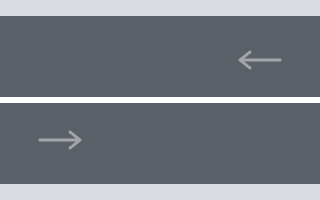
1.1 The solid line separates traffic flows in opposite directions (centre line). It also marks lane boundaries at dangerous places on the road, the boundaries of areas of the carriageway that vehicles must not enter, and the boundaries of parking spaces.
-
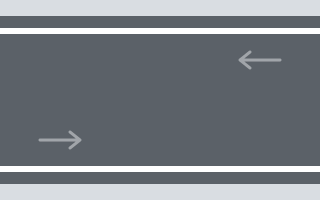
1.2 The solid edge line marks the edge of the carriageway and of the dividing strip.
-
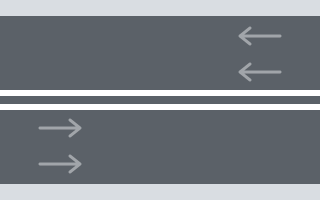
1.3 Separates traffic flows in opposite directions (centre lines) on roads with four or more lanes.
-
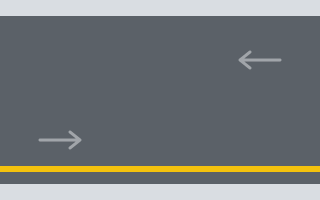
1.4 The solid yellow line marks places where stopping and parking are prohibited. It is used on its own or with sign 3.27 “No stopping” and is applied along the edge of the carriageway (in place of the edge line, if there is one) or on top of the kerb.
-
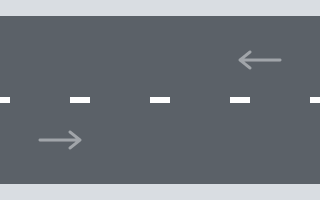
1.5 The broken line separates traffic flows in opposite directions (centre line) on roads with two or three lanes, and marks lane boundaries on roads with two or more lanes in the same direction.
-
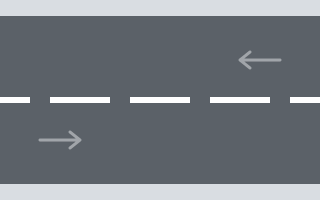
1.6 The “approach line” is a broken line warning drivers that they are approaching marking 1.1 or 1.11, which separates traffic flows in opposite directions or in the same direction (the dashes are three times as long as the gaps between them).
-
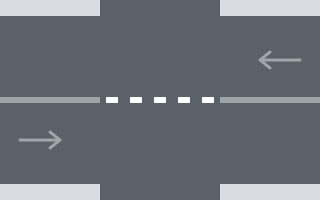
1.7 The broken line marks traffic lanes within an intersection (the dashes and the gaps between them are of equal length).
-
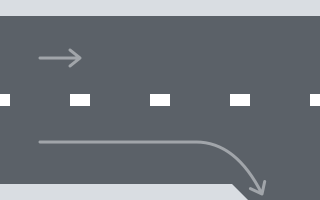
1.8 The wide broken line marks the boundary between the main lanes of the carriageway and an acceleration or deceleration lane.
-
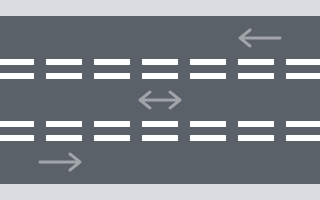
1.9 The broken (reversible) line marks the boundaries of lanes with reversible traffic control; when the reversible-lane traffic lights are switched off, it separates traffic flows in opposite directions.
-
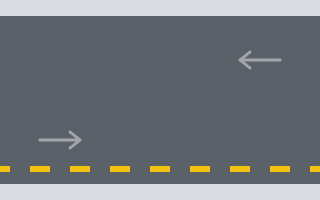
1.10 The broken yellow line marks places where parking is prohibited. It is used on its own or with sign 3.28 “No parking” and is applied along the edge of the carriageway (in place of the edge line, if there is one) or on top of the kerb.
-
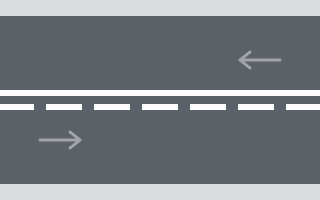
1.11 The combination of a solid and a broken line: 1) separates traffic flows in opposite directions or in the same direction on sections of road where changing lanes is allowed from one lane only; 2) marks places for U-turns, entrances to and exits from adjacent areas, and similar places where traffic may move in one direction only.
-
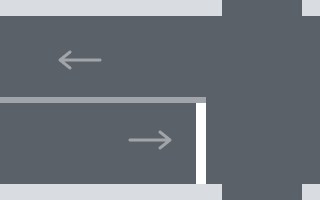
1.12 The “stop line” is a solid line that shows where the driver must stop when the traffic light (or traffic controller) gives a stop signal or where there is sign 2.5 “No driving without stopping”, and also before a railway crossing when traffic across it is prohibited.
-
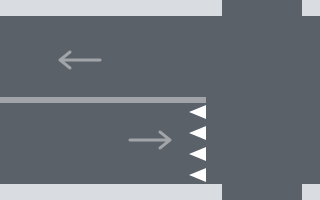
1.13 Shows where the driver must, if necessary, stop and give way to vehicles travelling on the intersecting road.
-
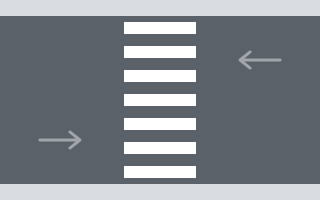
1.14.1 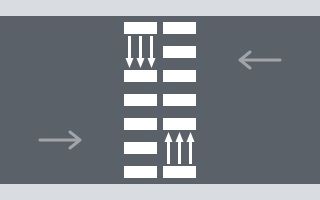
1.14.2 The “zebra” marking indicates a pedestrian crossing. The arrows on marking 1.14.2 show the direction of pedestrian traffic.
-
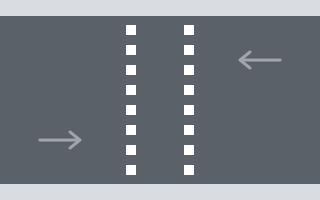
1.15 The broken lines mark the place where a cycle track crosses the carriageway.
-
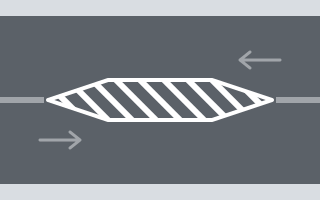
1.16.1 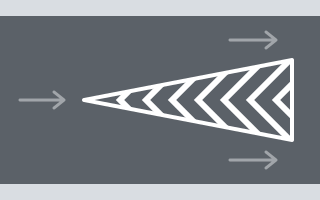
1.16.2 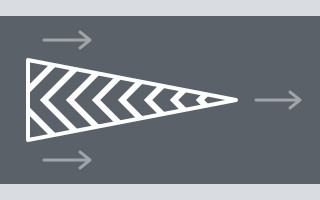
1.16.3 These markings indicate traffic islands: 1.16.1 – at places where traffic flows in opposite directions are separated; 1.16.2 – at places where traffic flows in the same direction are separated; 1.16.3 – at places where traffic flows from different directions merge.
-
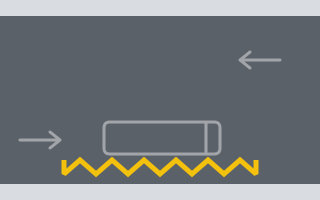
1.17 The solid yellow zig-zag line marks public transport stops and, where there is sign 5.18 “Taxi rank”, taxi ranks.
-
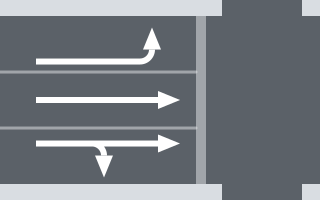
1.18 Shows the permitted directions of travel in each lane at an intersection. It is used on its own or with signs 5.15.1 “Directions of travel by lane” and 5.15.2 “Directions of travel in a lane”. A marking with a dead-end symbol means that turning into the nearest carriageway is prohibited. A marking that allows a left turn from the leftmost lane also allows a U-turn.
-
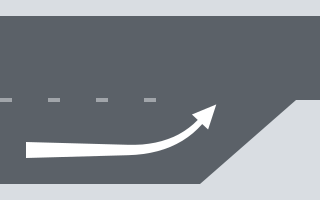
1.19 Warns drivers that they are approaching: 1) the end of a lane (a section where the number of lanes in that direction decreases). It may be used with signs 1.20.1–1.20.3 “Road narrows”; 2) marking 1.1 or 1.11 where it separates traffic flows in opposite directions. It is used together with marking 1.6 “Approach line”.
-
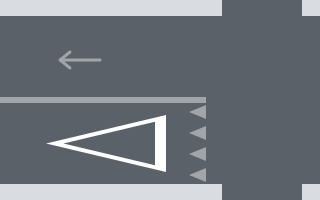
1.20 Warns drivers that they are approaching marking 1.13.
-
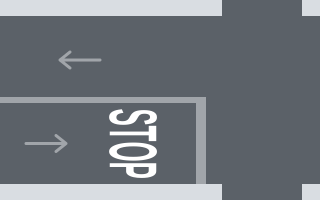
1.21 The word “STOP” warns drivers that they are approaching marking 1.12 when that marking is used together with sign 2.5 “No driving without stopping”.
-
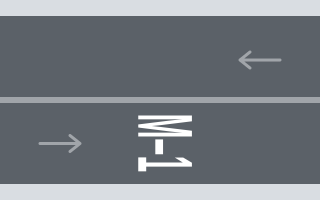
1.22 Shows the number of the road (route).
-
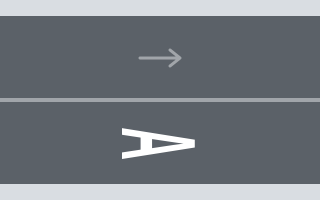
1.23 Marks a special lane for public transport.
-
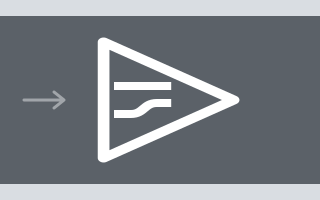
1.24.1 
1.24.2 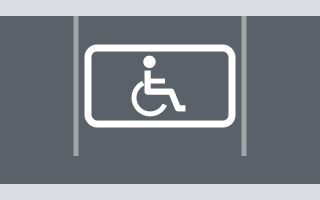
1.24.3 These markings repeat road signs 1.20.2 “Road narrows”, 3.24 “Maximum speed limit” and 8.17 “Persons with disabilities” respectively, and are used together with them.
-
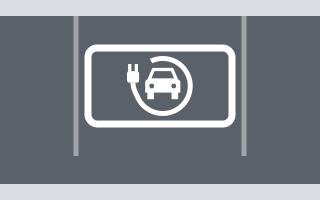
1.24.4 This marking repeats plate 8.4.3.1. It is used on its own or together with plate 8.4.3.1.
-
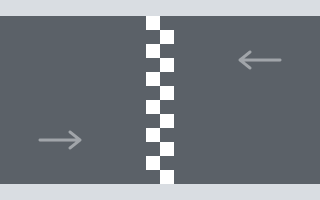
1.25 Marks speed bumps on the carriageway. It is used together with sign 5.20 “Speed bump”.
-
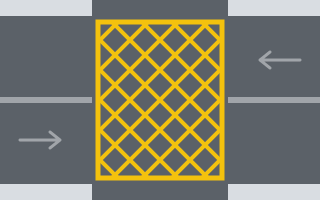
1.26 Colour: yellow. Marks the part of an intersection that must not be entered if a traffic jam ahead in the direction of travel would force the driver to stop, obstructing cross traffic on the intersecting road, except when turning right or left in the cases provided for by these Rules. It is used on its own or with sign 1.35 “Intersection area”.
Which lines may be crossed
Lines 1.1, 1.2 and 1.3 must not be crossed. Line 1.1 may be crossed where it marks the boundaries of parking spaces, when manoeuvring into or out of a parking space; line 1.2 may be crossed to stop on the shoulder and to move off again, in places where vehicles are allowed to stop or park. Lines 1.5–1.8 may be crossed from either side. Where there are no reversible-lane traffic lights or they are switched off, line 1.9 may be crossed if it is on the driver’s right; when the reversible-lane traffic lights are on, it may be crossed from either side if it separates lanes for traffic in the same direction. When the reversible-lane traffic lights are switched off, the driver must immediately move to the right of line 1.9. When the reversible-lane traffic lights are switched off, line 1.9 must not be crossed where it separates traffic flows in opposite directions. Line 1.11 may be crossed from the broken-line side, and from the solid-line side only when completing overtaking or driving around an obstacle.
II. Vertical markings
Vertical markings are combinations of black and white, blue and white, or red and white stripes on road structures and road furniture. They show the dimensions of these objects and serve as a visual guide.
-
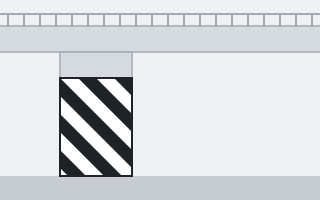
2.1.1 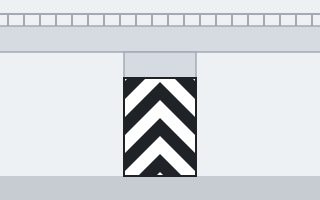
2.1.2 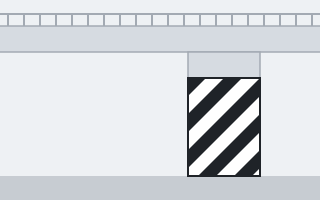
2.1.3 These markings indicate parts of road structures (bridge and overpass supports, the ends of parapets, etc.) that pose a danger to moving vehicles.
-
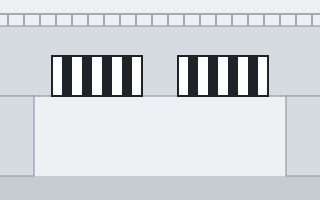
2.2 Marks the lower edge of the overhead structures of tunnels, bridges and overpasses.
-
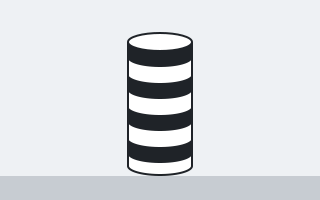
2.3 Marks round bollards on dividing strips and traffic islands.
-
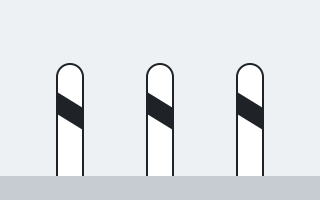
2.4 Marks guide posts, bollards, guard-rail posts and the like.
-
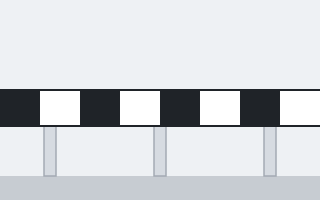
2.5 Marks the sides of guard-rails on sharp bends, steep descents and other dangerous sections of road.
-
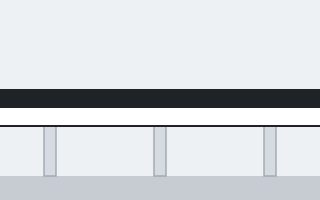
2.6 Marks the sides of guard-rails on other sections of road.
-
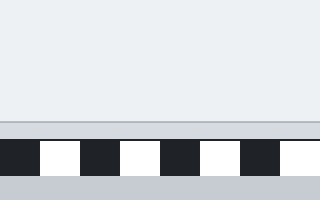
2.7 Marks raised traffic islands and kerbs on dangerous sections of road.