
Road signs
Road signs by group, with pictures and explanations.
I. Warning signs
-
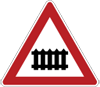
1.1
Railway crossing with barrier
-
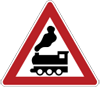
1.2
Railway crossing without a barrier
-

1.3.1
Single-track railway
Marks a railway crossing not equipped with a barrier, with one track.
-

1.3.2
Multi-track railway
Marks a railway crossing not equipped with a barrier, with two or more tracks.
-

1.4.1
Approaching a railway crossing
Additional warning about approaching a railway crossing outside of populated areas.
-

1.4.2
Approaching a railway crossing
Additional warning about approaching a railway crossing outside of populated areas.
-

1.4.3
Approaching a railway crossing
Additional warning about approaching a railway crossing outside of populated areas.
-
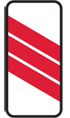
1.4.4
Approaching a railway crossing
Additional warning about approaching a railway crossing outside of populated areas.
-

1.4.5
Approaching a railway crossing
Additional warning about approaching a railway crossing outside of populated areas.
-

1.4.6
Approaching a railway crossing
Additional warning about approaching a railway crossing outside of populated areas.
-
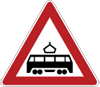
1.5
Intersection with a tram line
-
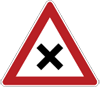
1.6
Intersection of equal-priority roads
-
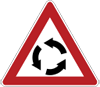
1.7
Roundabout intersection
-
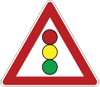
1.8
Traffic light regulation
An intersection, pedestrian crossing or section of road where traffic is regulated by a traffic light.
-
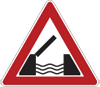
1.9
Drawbridge
Drawbridge or ferry crossing.
-
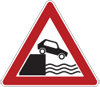
1.10
Exit onto an embankment
A place where the road leads onto an embankment or a shore.
-
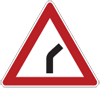
1.11.1
Dangerous bend
A bend in the road with a small radius or limited visibility, to the right.
-
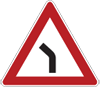
1.11.2
Dangerous bend
A bend in the road with a small radius or limited visibility, to the left.
-
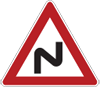
1.12.1
Dangerous bends
A section of road with dangerous bends, the first bend to the right.
-
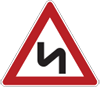
1.12.2
Dangerous bends
A section of road with dangerous bends, the first bend to the left.
-
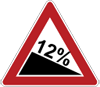
1.13
Steep descent
-
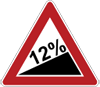
1.14
Steep climb
-
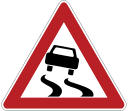
1.15
Slippery road
A section of road with increased slipperiness of the roadway.
-
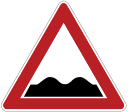
1.16
Rough road
A section of road that has unevenness on the roadway (undulations, potholes, uneven junctions with bridges, etc.).
-
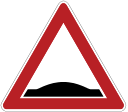
1.17
Speed bump
A section of road with artificial hump(s) to force a reduction in speed.
-
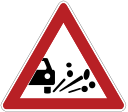
1.18
Flying gravel
A section of road where gravel, crushed stone and the like can be thrown out from under the wheels of vehicles.
-
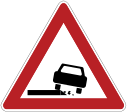
1.19
Dangerous shoulder
A section of road where driving onto the shoulder is dangerous.
-
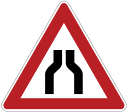
1.20.1
Road narrows
The road narrows on both sides.
-
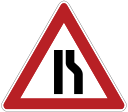
1.20.2
Road narrows
The road narrows on the right.
-
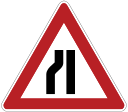
1.20.3
Road narrows
The road narrows on the left.
-
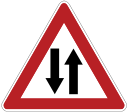
1.21
Two-way traffic
The beginning of a section of road (roadway) with oncoming traffic.
-
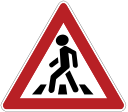
1.22
Pedestrian crossing
A pedestrian crossing marked with signs 5.19.1 and 5.19.2 “Pedestrian crossing” and/or road markings 1.14.1–1.14.2.
-
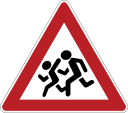
1.23
Children
A section of road near children's institutions (schools, kindergartens, etc.) where children may appear on the roadway.
-
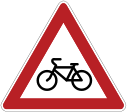
1.24
Intersection with a cycle path
-
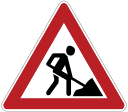
1.25
Roadworks
-
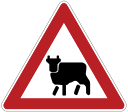
1.26
Cattle crossing
-
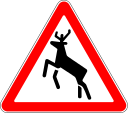
1.27
Wild animals
-
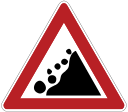
1.28
Falling rocks
A section of road where rockslides, landslides and falling rocks are possible.
-
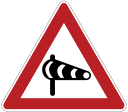
1.29
Crosswind
-
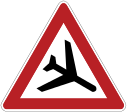
1.30
Low-flying planes
-
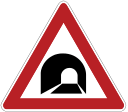
1.31
Tunnel
A tunnel in which there is no artificial lighting, or a tunnel in which the visibility of the entrance portal is limited.
-
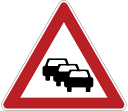
1.32
Traffic jam
A section of road where there is a traffic jam.
-
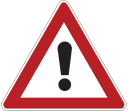
1.33
Other hazards
A section of road that contains hazards that are not indicated by other warning signs.
-



1.34.1
Direction of turn
Direction of movement on a curved road of small radius with limited visibility. Direction to bypass the road section being repaired.
-



1.34.2
Direction of turn
Direction of movement on a curved road of small radius with limited visibility. Direction to bypass the road section being repaired.
-


1.34.3
Direction of turn
Driving directions at a T-junction or fork in the road. Directions to bypass the road section being repaired.
-
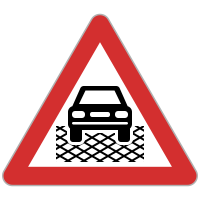
1.35
Intersection area
Indicates the approach to an intersection whose area is marked with road marking 1.26 and which must not be entered if a traffic jam ahead in the direction of travel would force the driver to stop, obstructing cross traffic on the intersecting road, except when turning right or left in the cases provided for by these Rules.
II. Priority signs
-
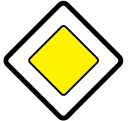
2.1
Main road
A road on which traffic has priority when passing through uncontrolled intersections.
-

2.2
End of main road
-
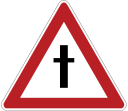
2.3.1
Intersection with a secondary road
-
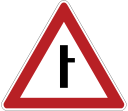
2.3.2
Junction with a secondary road
Junction on the right.
-
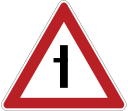
2.3.3
Junction with a secondary road
Junction on the left.
-
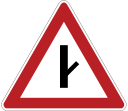
2.3.4
Junction with a secondary road
Junction on the right.
-
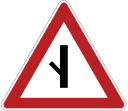
2.3.5
Junction with a secondary road
Junction on the left.
-
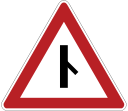
2.3.6
Junction with a secondary road
Junction on the right.
-
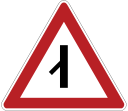
2.3.7
Junction with a secondary road
Junction on the left.
-
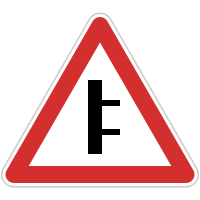
2.3.8
Junctions with secondary roads
Junctions on the right.
-
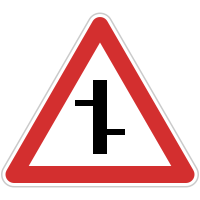
2.3.9
Junctions with secondary roads
Junction on the right, then on the left.
-
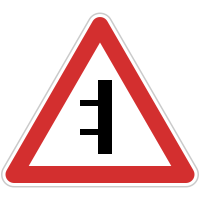
2.3.10
Junctions with secondary roads
Junctions on the left.
-
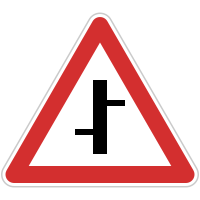
2.3.11
Junctions with secondary roads
Junction on the left, then on the right.
-
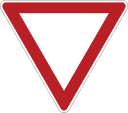
2.4
Give way
The driver must give way to vehicles travelling on the road being crossed or, where plate 8.13 “Direction of the main road” is present, on the main road.
-
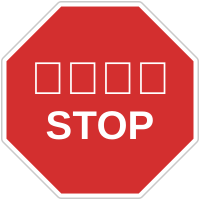
2.5
Driving without stopping is prohibited
It is prohibited to proceed without stopping before the stop line (or, if there is none, before the edge of the roadway being crossed). The driver must give way to vehicles travelling on the road being crossed or, where plate 8.13 “Direction of the main road” is present, on the main road. If sign 2.5 is placed before a railway crossing or a quarantine post, the driver must stop before the stop line or, if there is none, before the sign.
-

2.6
Priority to oncoming traffic
Entering a narrow section of road is prohibited if this may hinder oncoming traffic. The driver must give way to vehicles approaching the narrow section from the opposite direction.
-

2.7
Priority over oncoming traffic
A narrow section of road on which the driver has priority over oncoming vehicles.
III. Prohibitory signs
-

3.1
No entry
Entry of vehicles in this direction is prohibited.
-

3.2
No vehicles
All vehicles are prohibited.
-

3.3
No motor vehicles
-
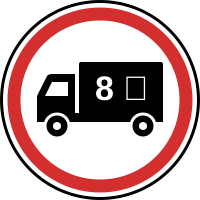
3.4
No trucks
The movement of trucks and vehicle combinations with a permissible maximum weight of more than 3.5 tons (if the weight is not indicated on the sign) or with a permissible maximum weight more than indicated on the sign, as well as tractors and self-propelled vehicles is prohibited.
-

3.5
No motorcycles
-

3.6
No tractors
The movement of tractors and self-propelled vehicles is prohibited.
-

3.7
No vehicles with trailers
It is prohibited to drive trucks and tractors with trailers of any type, as well as tow motor vehicles.
-

3.8
No horse-drawn vehicles
The movement of horse-drawn carts (sleighs) and riding or pack animals, as well as driving livestock, is prohibited.
-

3.9
No cycling
Bicycles and mopeds are prohibited.
-

3.10
No pedestrians
-
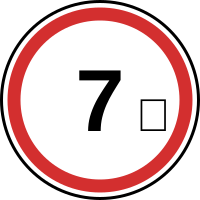
3.11
Weight limit
The movement of vehicles, including combinations of vehicles, the total actual weight of which is greater than that indicated on the sign, is prohibited.
-
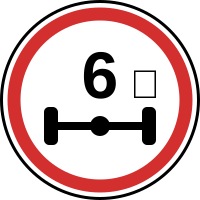
3.12
Axle weight limit
It is prohibited to drive vehicles whose actual weight on any axle exceeds that indicated on the sign.
-
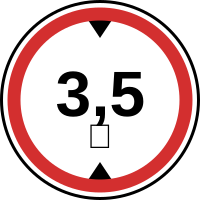
3.13
Height limit
The movement of vehicles whose overall height (with or without cargo) is greater than that indicated on the sign is prohibited.
-
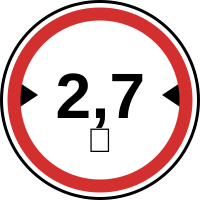
3.14
Width limit
It is prohibited to drive vehicles whose overall width (laden or unladen) is greater than that indicated on the sign.
-
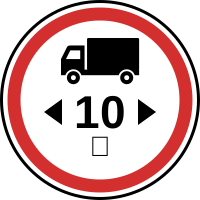
3.15
Length limit
The movement of vehicles (including road trains) whose overall length (with or without cargo) is greater than that indicated on the sign is prohibited.
-
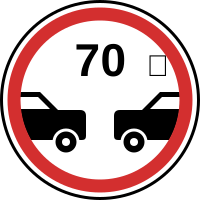
3.16
Minimum distance limit
It is prohibited to drive vehicles with a distance between them less than that indicated on the sign.
-
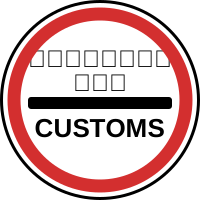
3.17.1
Customs
Passing the customs point without stopping is prohibited.
-
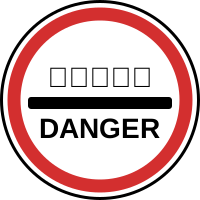
3.17.2
Danger
Further movement of all vehicles is prohibited because of a road accident, fire, emergency or other danger, except for vehicles of the police, ambulance, rescue and other services that have arrived to eliminate the danger. Movement may continue only after permission is given.
-
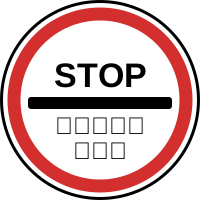
3.17.3
Checkpoint
Driving through checkpoints without stopping is prohibited.
-

3.18.1
No right turn
-

3.18.2
No left turn
-

3.19
No U-turn
-

3.20
No overtaking
Overtaking by any type of vehicle is prohibited. It is permitted to overtake slow-moving vehicles, horse-drawn carts, two-wheeled motorcycles without a sidecar, mopeds and bicycles.
-

3.21
End of no-overtaking zone
-

3.22
No overtaking by trucks
Overtaking by any type of vehicle is prohibited, except motorcycles, passenger cars, buses and trucks with a permissible maximum weight of up to 3.5 tons.
-

3.23
End of no-overtaking zone for trucks
-

3.24
Maximum speed limit
It is prohibited to drive at a speed (km/h) exceeding that indicated on the sign.
-

3.25
End of maximum speed limit zone
-

3.26
No horn
It is prohibited to use sound signals, except in cases where the signal is given to prevent a traffic accident.
-

3.27
No stopping
Stopping and parking of vehicles is prohibited.
-

3.28
No parking
Parking of vehicles is prohibited.
-

3.29
No parking on odd days of the month
-

3.30
No parking on even days of the month
When signs 3.29 and 3.30 are used together, vehicles are moved from one side of the road to the other between 19:00 and 21:00.
-

3.31
End of all restrictions
Marks the end of the zones of several of the following signs at once: 3.16, 3.20, 3.22, 3.24, 3.26, 3.27, 3.28, 3.29, 3.30.
-

3.32
No vehicles carrying dangerous goods
The movement of vehicles marked with the “Dangerous goods” identification sign is prohibited.
-

3.33
No vehicles carrying explosive and flammable goods
The movement of vehicles marked with the “Dangerous goods” identification sign and intended for carrying dangerous goods of classes 1, 2.2–2.4, 3.1, 3.2 and 5.2 (according to the standard) is prohibited.
IV. Mandatory signs
-

4.1.1
Go straight ahead
Driving is permitted only in the directions indicated by arrows on the signs. Signs 4.1.1–4.1.6 do not apply to route vehicles. Signs 4.1.1–4.1.6 apply to the intersection of roadways before which the sign is placed. When placed at the start of a road section, sign 4.1.1 applies up to the nearest intersection. The sign does not prohibit right turns into courtyards and other areas adjacent to the road.
-

4.1.2
Turn right
Driving is permitted only in the directions indicated by arrows on the signs. Signs 4.1.1–4.1.6 do not apply to route vehicles. Signs 4.1.1–4.1.6 apply to the intersection of roadways before which the sign is placed.
-

4.1.3
Turn left
Driving is permitted only in the directions indicated by arrows on the signs. Signs that permit a left turn also permit a U-turn. Signs 4.1.1–4.1.6 do not apply to route vehicles. Signs 4.1.1–4.1.6 apply to the intersection of roadways before which the sign is placed.
-

4.1.4
Go straight or turn right
Driving is permitted only in the directions indicated by arrows on the signs. Signs 4.1.1–4.1.6 do not apply to route vehicles. Signs 4.1.1–4.1.6 apply to the intersection of roadways before which the sign is placed.
-

4.1.5
Go straight or turn left
Driving is permitted only in the directions indicated by arrows on the signs. Signs that permit a left turn also permit a U-turn. Signs 4.1.1–4.1.6 do not apply to route vehicles. Signs 4.1.1–4.1.6 apply to the intersection of roadways before which the sign is placed.
-

4.1.6
Turn right or left
Driving is permitted only in the directions indicated by arrows on the signs. Signs that permit a left turn also permit a U-turn. Signs 4.1.1–4.1.6 do not apply to route vehicles. Signs 4.1.1–4.1.6 apply to the intersection of roadways before which the sign is placed.
-

4.2.1
Pass obstacle on the right
Passing the obstacle is permitted only on the side indicated by the arrow.
-

4.2.2
Pass obstacle on the left
Passing the obstacle is permitted only on the side indicated by the arrow.
-

4.2.3
Pass obstacle on the right or left
Passing is permitted on both the right and the left.
-

4.3
Roundabout
Movement in the direction indicated by the arrows is permitted.
-

4.4.1
Cycle path
Only bicycles and mopeds are allowed. Pedestrians may also use the cycle path if there is no sidewalk or footpath.
-
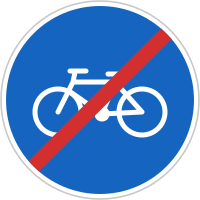
4.4.2
End of cycle path
-

4.5.1
Footpath
Only pedestrians are allowed.
-
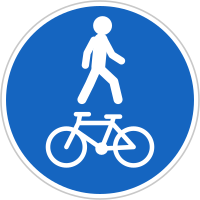
4.5.2
Shared pedestrian and cycle path (shared cycle-pedestrian path)
-
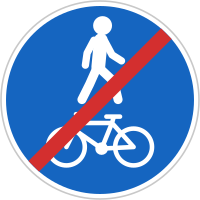
4.5.3
End of shared pedestrian and cycle path (end of shared cycle-pedestrian path)
-
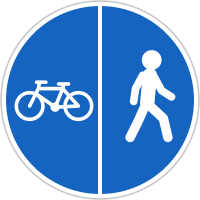
4.5.4
Segregated pedestrian and cycle path (segregated cycle-pedestrian path)
A cycle-pedestrian path whose cycle side and pedestrian side are separated by its construction and/or by horizontal markings 1.2, 1.23.2 and 1.23.3, or by other means.
-
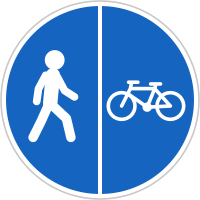
4.5.5
Segregated pedestrian and cycle path (segregated cycle-pedestrian path)
A cycle-pedestrian path whose cycle side and pedestrian side are separated by its construction and/or by horizontal markings 1.2, 1.23.2 and 1.23.3, or by other means.
-
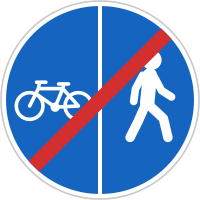
4.5.6
End of segregated pedestrian and cycle path (end of segregated cycle-pedestrian path)
-
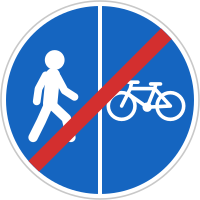
4.5.7
End of segregated pedestrian and cycle path (end of segregated cycle-pedestrian path)
-

4.6
Minimum speed limit
Driving is only permitted at the specified speed or higher (km/h).
-

4.7
End of minimum speed limit zone
-
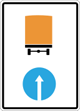
4.8.1
Direction of travel for vehicles carrying dangerous goods
Vehicles fitted with “Dangerous goods” identification signs may travel only in the direction indicated by the arrow on the sign: straight ahead.
-
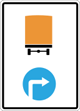
4.8.2
Direction of travel for vehicles carrying dangerous goods
Vehicles fitted with “Dangerous goods” identification signs may travel only in the direction indicated by the arrow on the sign: to the right.
-
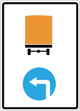
4.8.3
Direction of travel for vehicles carrying dangerous goods
Vehicles fitted with “Dangerous goods” identification signs may travel only in the direction indicated by the arrow on the sign: to the left.
-
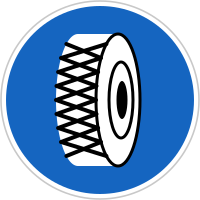
4.9.1
Snow chains compulsory
When there is snow or ice on the roadway surface, trucks and buses with a maximum permitted mass over 3.5 t may travel only with snow chains fitted to at least two driving wheels. Sign 4.9.1 applies from the place where it is installed up to sign 4.9.2. Sign 4.9.1 is used with plate 8.5.8. As an advance sign, 4.9.1 may be used with plate 8.1.1.
-
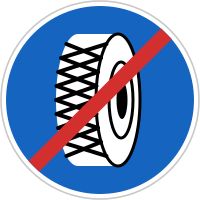
4.9.2
End of compulsory snow chains
The sign marks the end of the zone of sign 4.9.1.
V. Special regulation signs
-
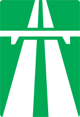
5.1
Motorway
A road on which the requirements of the Rules governing traffic on motorways apply.
-
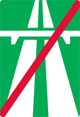
5.2
End of motorway
-
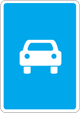
5.3
Road for cars
Motorcycles are also permitted.
-
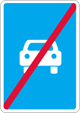
5.4
End of road for cars
-

5.5
One-way road
A road or carriageway along which vehicle traffic across its entire width is carried out in one direction.
-

5.6
End of one-way road
-

5.7.1
Entering a one-way road
Entering a one-way road or carriageway.
-

5.7.2
Entering a one-way road
Entering a one-way road or carriageway.
-

5.8
Reversible traffic
The beginning of a section of road where the direction of traffic in one or more lanes may be reversed.
-

5.9
End of reversible traffic
-

5.10
Entering a road with reversible traffic
-
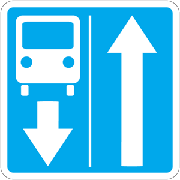
5.11.1
Road with a public transport lane
A road with a specially designated lane in which public transport vehicles travel against the general flow of traffic.
-
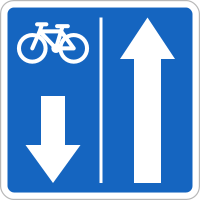
5.11.2
Road with a cycle lane
A road on which cyclists and moped riders travel in a specially designated lane against the general flow of vehicles.
-
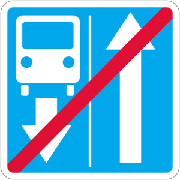
5.12.1
End of road with a public transport lane
-
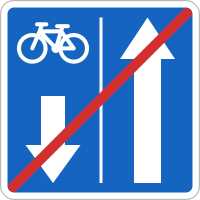
5.12.2
End of road with a cycle lane
-
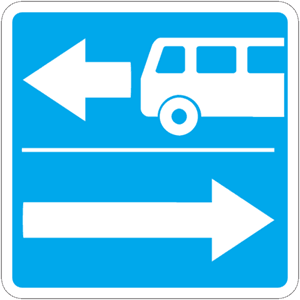
5.13.1
Entering a road with a public transport lane
-
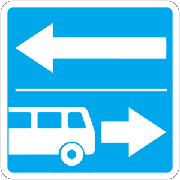
5.13.2
Entering a road with a public transport lane
-
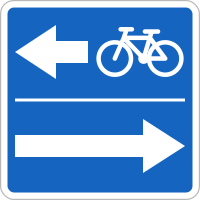
5.13.3
Entering a road with a cycle lane
-
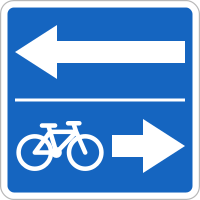
5.13.4
Entering a road with a cycle lane
-
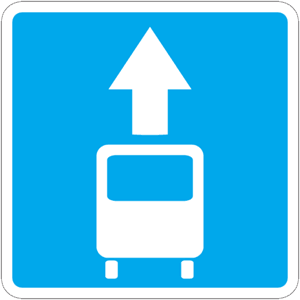
5.14
Public transport lane
A lane intended only for public transport vehicles travelling in the same direction as the general flow of traffic. The sign applies to the lane above which it is placed. A sign placed to the right of the road applies to the right-hand lane.
-
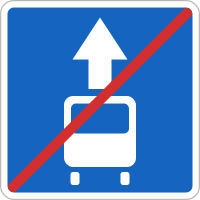
5.14.1
End of public transport lane
-
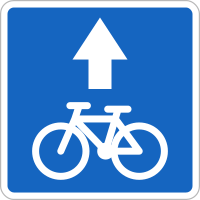
5.14.2
Cycle lane
-
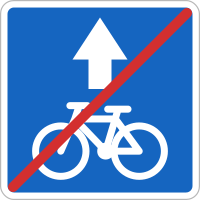
5.14.3
End of cycle lane
-
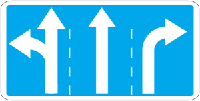
5.15.1
Directions of travel by lane
The number of lanes and the permitted directions of travel in each of them. Signs 5.15.1 and 5.15.2 that permit a left turn from the leftmost lane also permit a U-turn from that lane. Signs 5.15.1 and 5.15.2 do not apply to public transport vehicles. Signs 5.15.1 and 5.15.2 placed before an intersection apply to the whole intersection, unless other signs 5.15.1 or 5.15.2 placed there give different instructions.
-
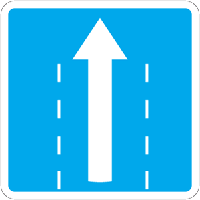
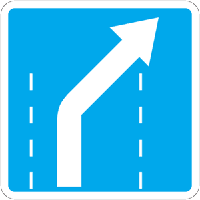
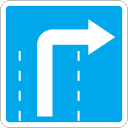
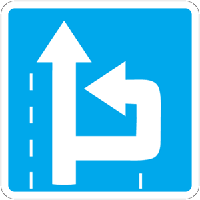
5.15.2
Directions of travel in a lane
The permitted directions of travel in the lane. Signs 5.15.1 and 5.15.2 that permit a left turn from the leftmost lane also permit a U-turn from that lane. Signs 5.15.1 and 5.15.2 do not apply to public transport vehicles. Signs 5.15.1 and 5.15.2 placed before an intersection apply to the whole intersection, unless other signs 5.15.1 or 5.15.2 placed there give different instructions.
-
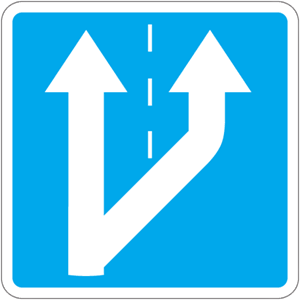
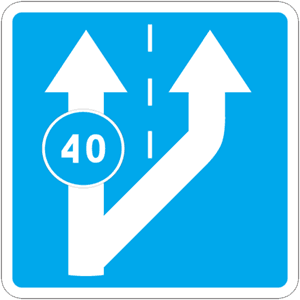
5.15.3
Start of lane
The beginning of an additional lane on an uphill section or of a deceleration lane. If this sign, placed before the additional lane, shows sign 4.6 “Minimum speed limit”, drivers of vehicles that cannot continue in the main lane at least at the speed shown on the sign must move into the additional lane.
-
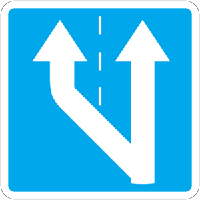
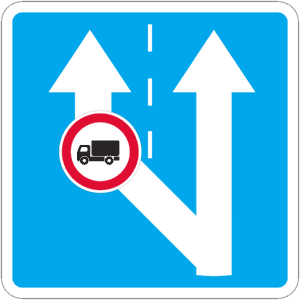
5.15.4
Start of lane
The beginning of a section of the middle lane of a three-lane road intended for traffic in this direction. If sign 5.15.4 shows a sign prohibiting any type of vehicle, those vehicles are prohibited from travelling in the corresponding lanes.
-
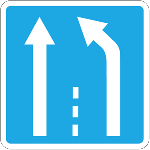
5.15.5
End of lane
The end of an additional uphill lane or acceleration lane.
-
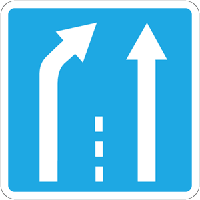
5.15.6
End of lane
The end of a section of the middle lane of a three-lane road intended for traffic in this direction.
-
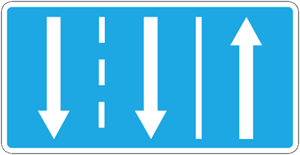
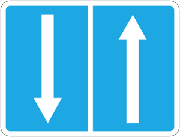
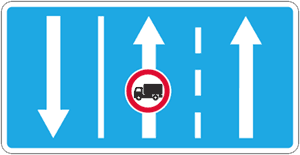
5.15.7
Direction of travel by lane
If sign 5.15.7 shows a sign prohibiting the movement of any vehicles, then the movement of these vehicles in the corresponding lane is prohibited. Signs 5.15.7 with the appropriate number of arrows can be used on roads with four or more lanes.
-
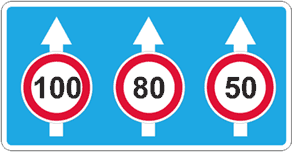
5.15.8
Number of lanes
Indicates the number of lanes and the traffic modes in the lanes. The driver must comply with the requirements of the signs shown on the arrows.
-
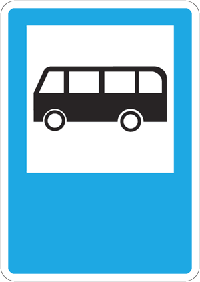
5.16
Bus and (or) trolleybus stopping place
-
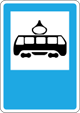
5.17
Tram stopping place
-
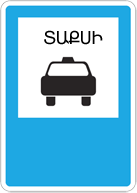
5.18
Taxi rank
-

5.19.1
Pedestrian crossing
Where the crossing has no 1.14.1–1.14.2 markings, sign 5.19.1 is placed on the left of the road at the far boundary of the crossing.
-

5.19.2
Pedestrian crossing
Where the crossing has no 1.14.1–1.14.2 markings, sign 5.19.2 is placed on the right of the road at the near boundary of the crossing.
-
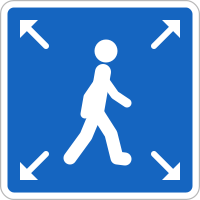
5.19.3
Diagonal pedestrian crossing
The sign is placed at intersections where pedestrian traffic is organised diagonally across the intersection.
-
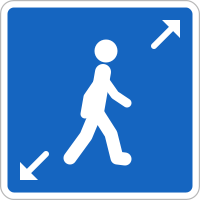
5.19.4
Diagonal pedestrian crossing
The sign is placed at intersections where pedestrian traffic is organised diagonally across the intersection.
-

5.20
Speed bump
Marks the boundaries of a speed bump. The sign is placed at the near boundary of the speed bump as seen by approaching vehicles.
-
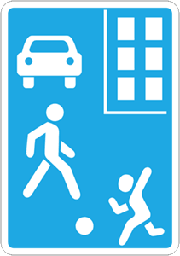
5.21
Residential zone
An area where the requirements of the Rules governing traffic in residential zones apply.
-
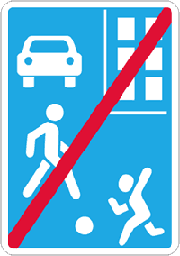
5.22
End of residential zone
-
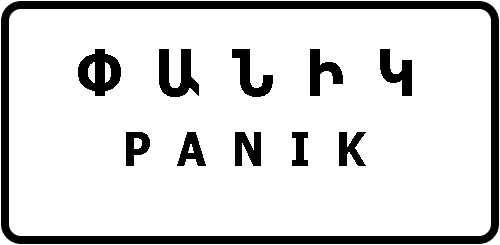
5.23.1
Beginning of populated area
The beginning of a populated area where the requirements of the Rules governing traffic in populated areas apply.
-

5.23.2
Beginning of populated area
The beginning of a populated area where the requirements of the Rules governing traffic in populated areas apply.
-
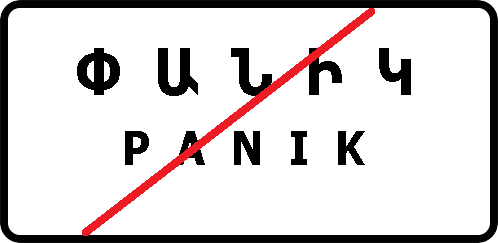
5.24.1
End of populated area
The place from which, on this road, the requirements of the Rules governing traffic in populated areas cease to apply.
-

5.24.2
End of populated area
The place from which, on this road, the requirements of the Rules governing traffic in populated areas cease to apply.
-
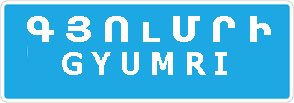
5.25
Beginning of populated area
The name and beginning of a populated area where, on this road, the requirements of the Rules governing traffic in populated areas do not apply.
-
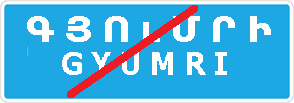
5.26
End of populated area
The end of the populated area marked with sign 5.25.
-
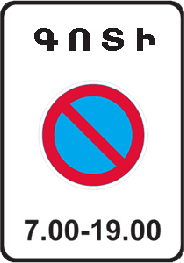
5.27
Restricted parking zone
The place where an area (section of road) in which parking is prohibited begins.
-
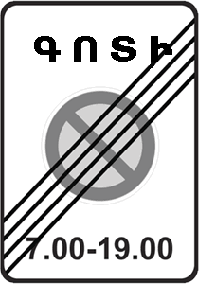
5.28
End of restricted parking zone
-
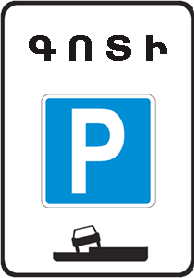
5.29
Regulated parking zone
The place where an area (section of road) in which parking is permitted and regulated by plates and markings begins.
-
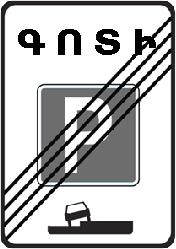
5.30
End of regulated parking zone
-
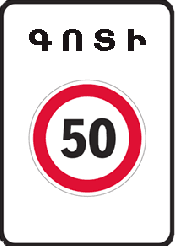
5.31
Maximum speed limit zone
The place where an area (section of road) with a maximum speed limit begins.
-
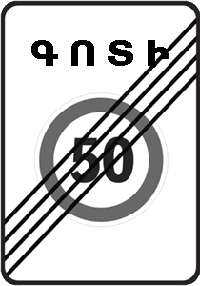
5.32
End of maximum speed limit zone
-
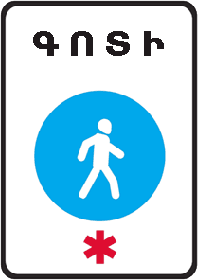
5.33
Pedestrian zone
The place where an area (section of road) in which only pedestrian traffic is permitted begins.
-
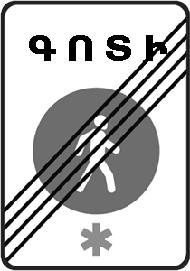
5.34
End of pedestrian zone
VI. Information signs
-
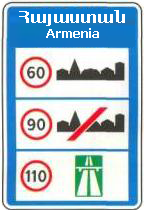
6.1
General maximum speed limits
The general maximum speed limits established by the Traffic Rules.
-

6.2
Recommended speed
The speed recommended for driving on this section of road. The sign applies up to the nearest intersection; when sign 6.2 is used together with a warning sign, its zone is determined by the length of the dangerous section.
-
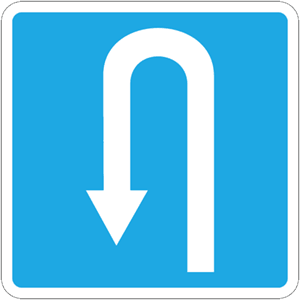
6.3.1
U-turn place
Turning left is prohibited.
-
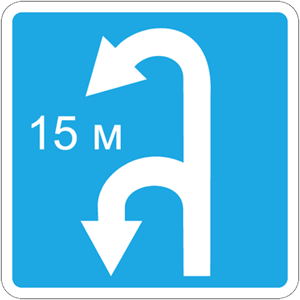
6.3.2
U-turn zone
Length of the U-turn zone. Turning left is prohibited.
-
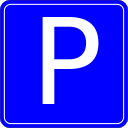
6.4
Parking place
-
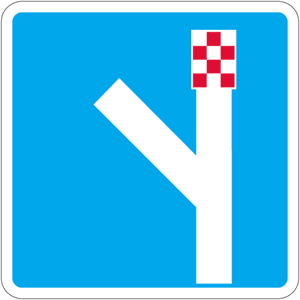
6.5
Emergency stop lane
An emergency stop lane on a steep descent.
-

6.6
Pedestrian underpass
-
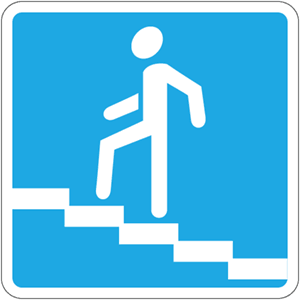
6.7
Pedestrian overpass
-
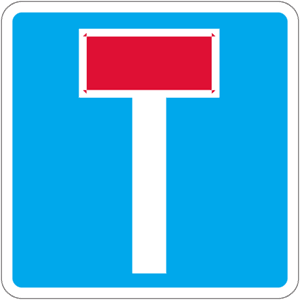
6.8.1
Dead end
A road with no through passage.
-
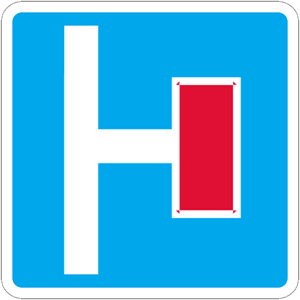
6.8.2
Dead end
A road with no through passage.
-
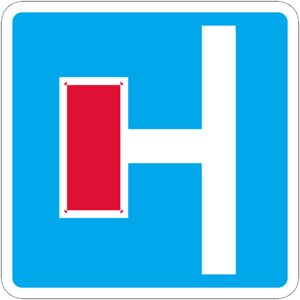
6.8.3
Dead end
A road with no through passage.
-
6.9.1
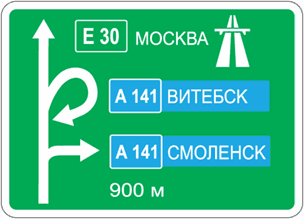
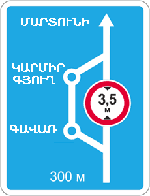
Advance direction sign
Directions to the settlements and other objects shown on the sign. These signs may show sign 6.14.1, motorway and airport symbols and other pictograms. Sign 6.9.1 may also show other signs informing about traffic conditions. The bottom part of sign 6.9.1 shows the distance from the sign to the intersection or to the start of the deceleration lane. Sign 6.9.1 is also used to show the way around a section of road where one of the prohibitory signs 3.11–3.15 is installed. A green or blue background on signs 6.9.1, 6.9.2, 6.10.1 and 6.10.2 placed outside a settlement means that the route to the settlement or object shown runs along a motorway or another road, respectively. A green or blue panel on signs 6.9.1, 6.9.2, 6.10.1 and 6.10.2 placed in settlements means that, after leaving that settlement, the route to the settlement or object shown on the sign will run along a motorway or another road, respectively, while a white background means that the object shown is in that settlement.
-
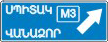
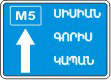
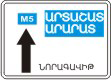
6.9.2
Advance direction sign (single direction)
Directions to the settlements and other objects shown on the sign. These signs may show sign 6.14.1, motorway and airport symbols and other pictograms. A green or blue background on signs 6.9.1, 6.9.2, 6.10.1 and 6.10.2 placed outside a settlement means that the route to the settlement or object shown runs along a motorway or another road, respectively. A green or blue panel on signs 6.9.1, 6.9.2, 6.10.1 and 6.10.2 placed in settlements means that, after leaving that settlement, the route to the settlement or object shown on the sign will run along a motorway or another road, respectively, while a white background means that the object shown is in that settlement.
-
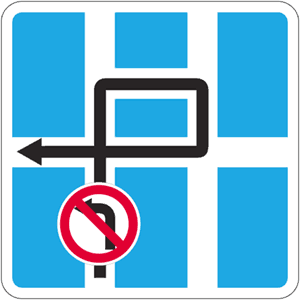
6.9.3
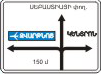
Traffic diagram
The route to follow when certain manoeuvres are prohibited at an intersection, or the permitted directions of travel at a complex intersection.
-
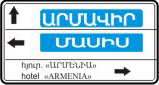


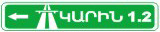
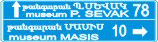
6.10.1
Direction sign
Directions to points on the route. The signs may show the distances (km) to these objects, motorway and airport symbols and other pictograms. A green or blue background on signs 6.9.1, 6.9.2, 6.10.1 and 6.10.2 placed outside a settlement means that the route to the settlement or object shown runs along a motorway or another road, respectively. A green or blue panel on signs 6.9.1, 6.9.2, 6.10.1 and 6.10.2 placed in settlements means that, after leaving that settlement, the route to the settlement or object shown on the sign will run along a motorway or another road, respectively, while a white background means that the object shown is in that settlement.
-

6.10.2
Direction sign (single direction)
Directions to points on the route. The signs may show the distances (km) to these objects, motorway and airport symbols and other pictograms. A green or blue background on signs 6.9.1, 6.9.2, 6.10.1 and 6.10.2 placed outside a settlement means that the route to the settlement or object shown runs along a motorway or another road, respectively. A green or blue panel on signs 6.9.1, 6.9.2, 6.10.1 and 6.10.2 placed in settlements means that, after leaving that settlement, the route to the settlement or object shown on the sign will run along a motorway or another road, respectively, while a white background means that the object shown is in that settlement.
-
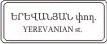


6.11
Name of object
The name of an object other than a settlement (river, lake, mountain pass, landmark, etc.).
-
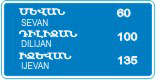
6.12
Distance sign
Distances (km) to the settlements along the route.
-
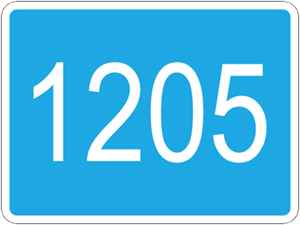
6.13
Kilometre sign
Distance (km) to the beginning or end of the road.
-
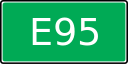
6.14.1
Route number
The number assigned to the road (route).
-
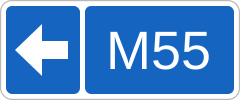
6.14.2
Route number
The number and direction of the road (route).
-
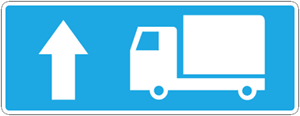
6.15.1
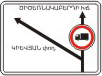
Direction of travel for trucks
The recommended direction of travel for trucks, tractors and self-propelled machines if their movement in one of the directions is prohibited at the intersection.
-
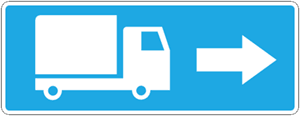
6.15.2
Direction of travel for trucks
The recommended direction of travel for trucks, tractors and self-propelled machines if their movement in one of the directions is prohibited at the intersection.
-
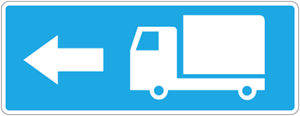
6.15.3
Direction of travel for trucks
The recommended direction of travel for trucks, tractors and self-propelled machines if their movement in one of the directions is prohibited at the intersection.
-
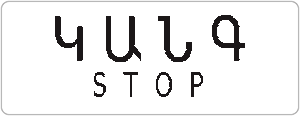
6.16
Stop line
The place where vehicles stop when a traffic light (traffic controller) shows a prohibiting signal.
-
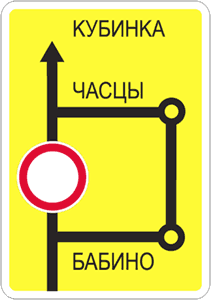
6.17
Detour diagram
The detour route around a section of road temporarily closed to traffic.
-
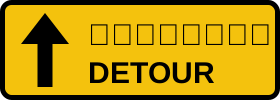
6.18.1
Detour direction
The direction of the detour around a section of road temporarily closed to traffic.
-
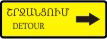
6.18.2
Detour direction
The direction of the detour around a section of road temporarily closed to traffic.
-
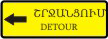
6.18.3
Detour direction
The direction of the detour around a section of road temporarily closed to traffic.
-
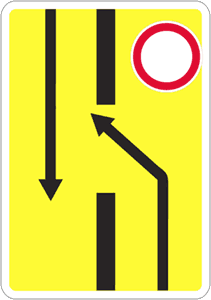
6.19.1
Advance sign for changing to another carriageway
The direction for bypassing a section of the carriageway closed to traffic on a road with a dividing strip, or for returning to the right-hand carriageway.
-
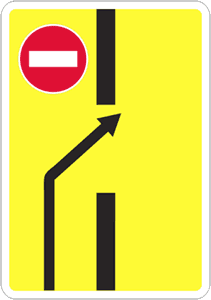
6.19.2
Advance sign for changing to another carriageway
The direction for bypassing a section of the carriageway closed to traffic on a road with a dividing strip, or for returning to the right-hand carriageway.
-

6.20.1
Emergency exit
Indicates the place in the tunnel where the emergency exit is located.
-

6.20.2
Emergency exit
Indicates the place in the tunnel where the emergency exit is located.
-

6.21.1
Direction to the emergency exit
Indicates the direction to the emergency exit and the distance to it.
-
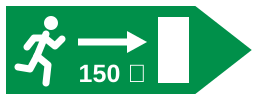
6.21.2
Direction to the emergency exit
Indicates the direction to the emergency exit and the distance to it.
VII. Service signs
-
7.1
First aid station
-
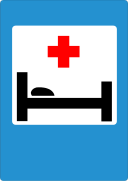
7.2
Hospital
-
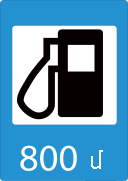
7.3
Gas station
-
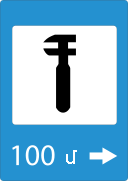
7.4
Car maintenance
-
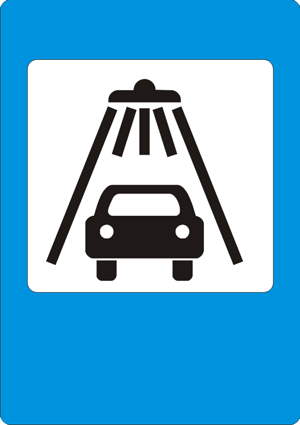
7.5
Car wash
-

7.6
Telephone
-
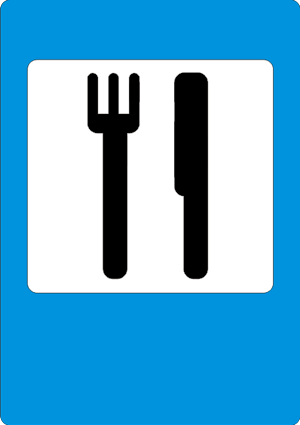
7.7
Food station
-
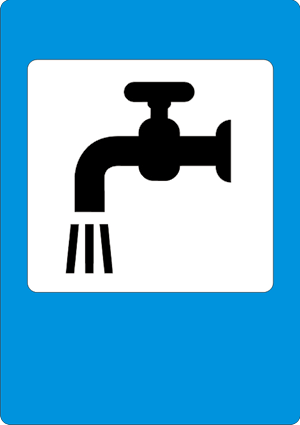
7.8
Drinking water
-
7.9
Hotel or motel
-
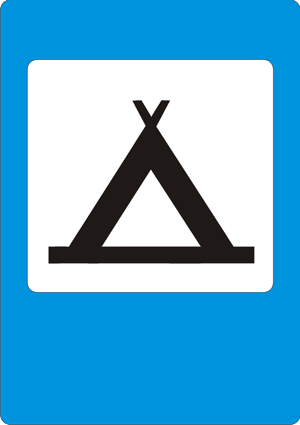
7.10
Camping
-
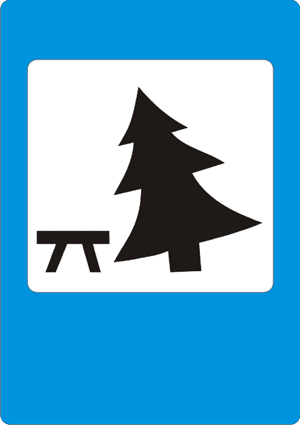
7.11
Rest area
-
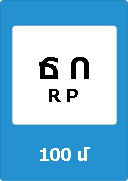
7.12
Road patrol post
-
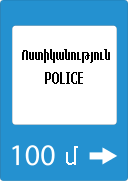
7.13
Police
-
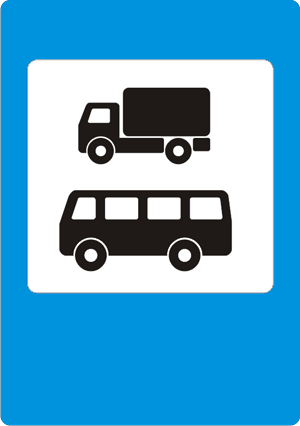
7.14
International road transport control point
-
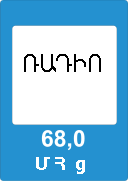
7.15
Reception area of a radio station transmitting traffic information
A section of road where radio station broadcasts are received at the frequency indicated on the sign.
-
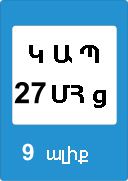
7.16
Radio communication zone with emergency services
A section of road where a radio communication system with emergency services operates on the civilian frequency indicated on the sign.
-
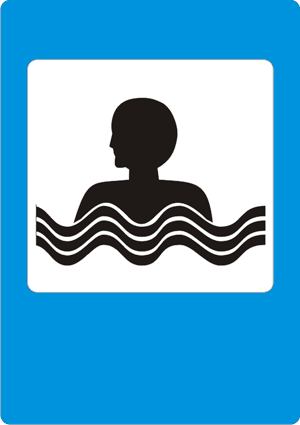
7.17
Pool or beach
-
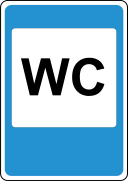
7.18
Toilet
-

7.19
Emergency telephone
Indicates the location where the telephone for calling emergency services is located.
-
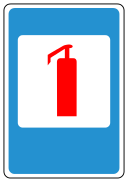
7.20
Fire extinguisher
Indicates the location of the fire extinguisher.
-
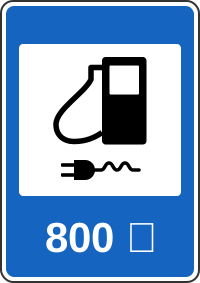
7.21
Gas station with electric vehicle charging
VIII. Additional information plates
-
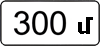
8.1.1
Distance to object
Indicates the distance from the sign to the beginning of the dangerous section, the place where the corresponding restriction is introduced, or a specific object (place) located ahead in the direction of travel.
-
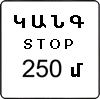
8.1.2
Distance to object
Indicates the distance from sign 2.4 “Give way” to the intersection when sign 2.5 “Driving without stopping is prohibited” is installed immediately before the intersection.
-
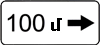
8.1.3
Distance to object
Indicates the distance to an object located off the road.
-
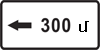
8.1.4
Distance to object
Indicates the distance to an object located off the road.
-
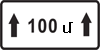
8.2.1
Area of action
Indicates the length of a dangerous section of road marked with warning signs, or the area of action of prohibitory and information signs.
-
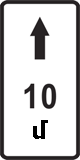
8.2.2
Area of action
Indicates the area of action of prohibitory signs 3.27 “No stopping”, 3.28 “No parking”, 3.29 “No parking on odd days of the month” and 3.30 “No parking on even days of the month”.
-
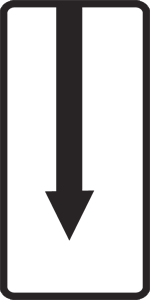
8.2.3
Area of action
Indicates the end of the area of action of signs 3.27–3.30.
-
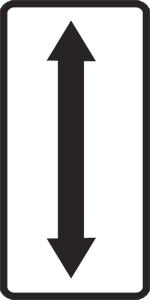
8.2.4
Area of action
Informs drivers that they are within the area of action of signs 3.27–3.30.
-
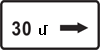
8.2.5
Area of action
Indicates the direction and area of action of signs 3.27–3.30 when stopping or parking is prohibited along one side of a square, a building facade, etc.
-
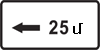
8.2.6
Area of action
Indicates the direction and area of action of signs 3.27–3.30 when stopping or parking is prohibited along one side of a square, a building facade, etc.
-
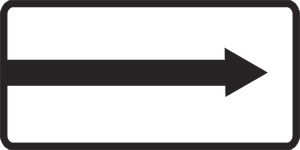
8.3.1
Directions of action
Indicate the directions of action of signs installed before an intersection, or the directions of travel to objects located right by the road.
-
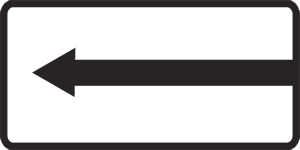
8.3.2
Directions of action
Indicate the directions of action of signs installed before an intersection, or the directions of travel to objects located right by the road.
-
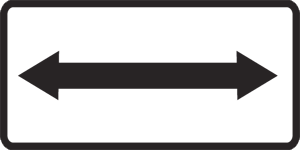
8.3.3
Directions of action
Indicate the directions of action of signs installed before an intersection, or the directions of travel to objects located right by the road.
-
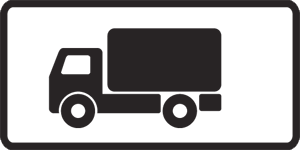
8.4.1
Type of vehicle
The sign used with this plate applies to trucks with a permissible maximum weight of more than 3.5 t, including those operated with a trailer.
-
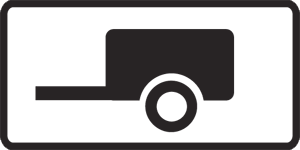
8.4.2
Type of vehicle
The sign used with this plate applies to trucks or tractors of any type with a trailer or semi-trailer, and to vehicles towing motor vehicles.
-
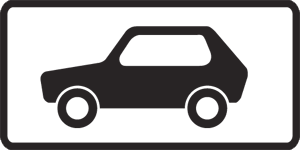
8.4.3
Type of vehicle
The sign used with this plate applies to passenger cars and to trucks with a permissible maximum weight of up to 3.5 t.
-
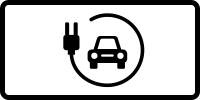
8.4.3.1
Type of vehicle
The sign used with this plate applies to electric vehicles and hybrid cars that can be charged from an external power source.
-
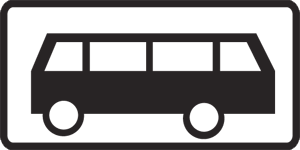
8.4.4
Type of vehicle
Indicates the type of vehicle to which the sign applies.
-
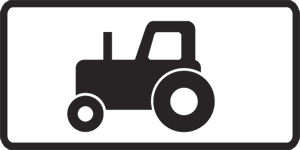
8.4.5
Type of vehicle
Indicates the type of vehicle to which the sign applies.
-
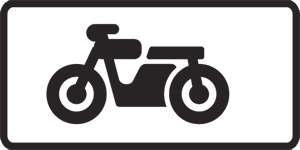
8.4.6
Type of vehicle
Indicates the type of vehicle to which the sign applies.
-
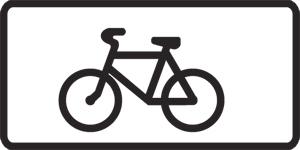
8.4.7
Type of vehicle
Indicates the type of vehicle to which the sign applies.
-
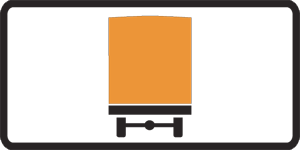
8.4.8
Type of vehicle
The sign used with this plate applies to vehicles bearing the “Dangerous goods” identification sign.
-
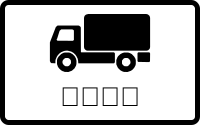
8.4.9
Except type of vehicle
Indicate the type of vehicle to which the sign does not apply.
-
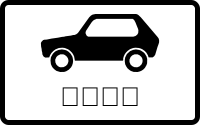
8.4.10
Except type of vehicle
Indicate the type of vehicle to which the sign does not apply.
-
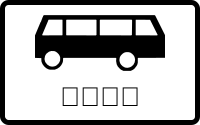
8.4.11
Except type of vehicle
Indicate the type of vehicle to which the sign does not apply.
-
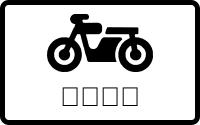
8.4.12
Except type of vehicle
Indicate the type of vehicle to which the sign does not apply.
-
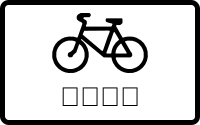
8.4.13
Except type of vehicle
Indicate the type of vehicle to which the sign does not apply.
-
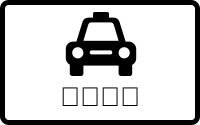
8.4.14
Except type of vehicle
Indicates that the sign does not apply to vehicles used as taxis.
-
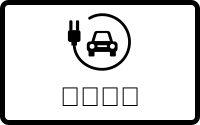
8.4.15
Except type of vehicle
Indicate the type of vehicle to which the sign does not apply.
-

8.5.1
Saturdays, Sundays and holidays
Indicate the days of the week during which the sign is valid.
-

8.5.2
Working days
Indicate the days of the week during which the sign is valid.
-
8.5.3
Days of the week
Indicate the days of the week during which the sign is valid.
-
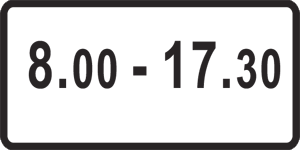
8.5.4
Validity time
Indicates the time of day during which the sign is valid.
-
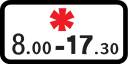
8.5.5
Validity time
Indicate the days of the week and the time of day during which the sign is valid.
-
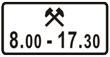
8.5.6
Validity time
Indicate the days of the week and the time of day during which the sign is valid.
-
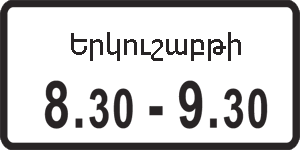
8.5.7
Validity time
Indicate the days of the week and the time of day during which the sign is valid.
-
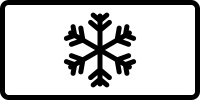
8.5.8
Black ice
Used with sign 4.9.1 to indicate that sign 4.9.1 applies only while the road surface is covered with snow or ice. If necessary, plate 8.5.8 may also be used with signs 1.15, 1.32, 1.33, 3.2, 3.3, 3.4, 3.5, 3.7, 3.8, 3.9, 3.10, 3.20, 3.22, 3.24, 3.32, 3.33 and 5.31.
-
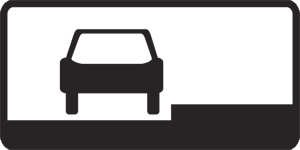
8.6.1
Method of parking a vehicle
Indicates that all vehicles must be parked on the roadway along the sidewalk.
-
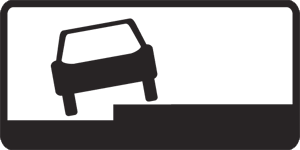
8.6.2
Method of parking a vehicle
Indicates how cars and motorcycles are to be parked at a parking place by the sidewalk.
-
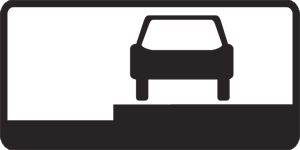
8.6.3
Method of parking a vehicle
Indicates how cars and motorcycles are to be parked at a parking place by the sidewalk.
-
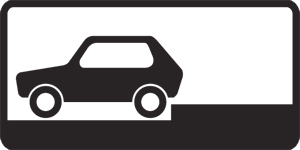
8.6.4
Method of parking a vehicle
Indicates how cars and motorcycles are to be parked at a parking place by the sidewalk.
-
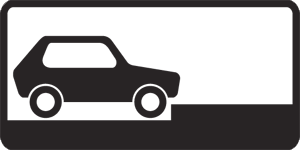
8.6.5
Method of parking a vehicle
Indicates how cars and motorcycles are to be parked at a parking place by the sidewalk.
-
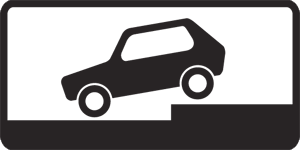
8.6.6
Method of parking a vehicle
Indicates how cars and motorcycles are to be parked at a parking place by the sidewalk.
-
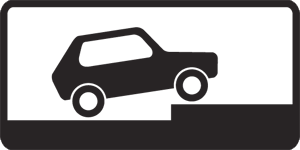
8.6.7
Method of parking a vehicle
Indicates how cars and motorcycles are to be parked at a parking place by the sidewalk.
-
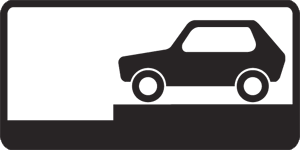
8.6.8
Method of parking a vehicle
Indicates how cars and motorcycles are to be parked at a parking place by the sidewalk.
-
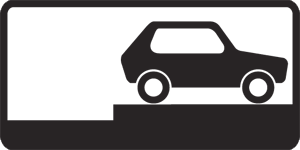
8.6.9
Method of parking a vehicle
Indicates how cars and motorcycles are to be parked at a parking place by the sidewalk.
-
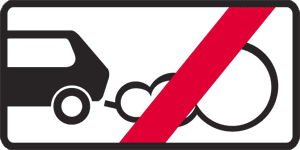
8.7
Parking with the engine not running
Indicates that in a parking place marked with sign 6.4 “Parking place”, vehicles may be parked only with the engine not running.
-
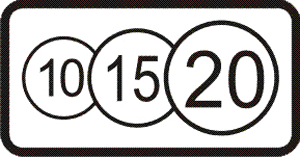
8.8
Paid services
Indicates that the services provided are paid.
-
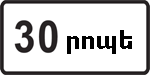
8.9
Limitation of parking duration
Indicates the maximum time a vehicle may stay in a parking place marked with sign 6.4 “Parking place”.
-
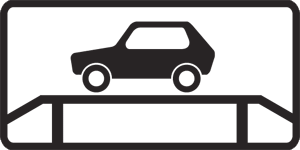
8.10
A place to inspect cars
Indicates that the area marked with sign 6.4 “Parking place” or 7.11 “Rest area” has an inspection pit or other facility for inspecting vehicles.
-
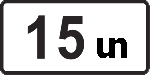
8.11
Limitation of permissible maximum weight
Indicates that the sign applies only to vehicles whose permissible maximum weight exceeds the weight shown on the plate.
-
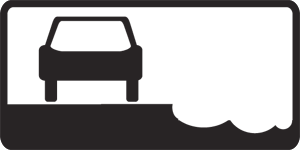
8.12
Dangerous roadside
Warns that driving onto the shoulder is dangerous because of repair work. Used with sign 1.25 “Roadworks”.
-

8.13
Main road direction
Indicates the direction of the main road at an intersection.
-

8.14
Traffic lane
Indicates the lane to which a sign or traffic light applies.
-
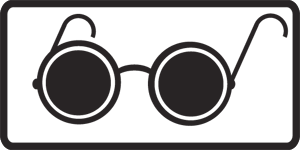
8.15
Blind pedestrians
Indicates that the pedestrian crossing is used by blind people. Used with signs 1.22, 5.19.1 and 5.19.2 “Pedestrian crossing” and with traffic lights.
-
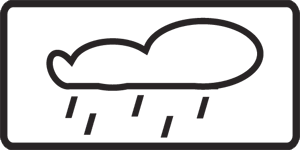
8.16
Wet road surface
Indicates that the sign applies only while the road surface is wet.
-
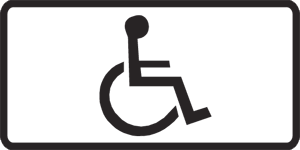
8.17
Persons with disabilities
Indicates that sign 6.4 “Parking place” applies only to motorised wheelchairs and cars bearing the “Person with disabilities” identification sign.
-
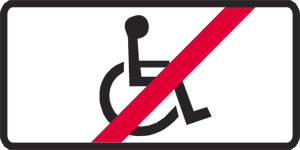
8.18
Except persons with disabilities
Indicates that the sign does not apply to motorised wheelchairs and cars bearing the “Person with disabilities” identification sign.
-
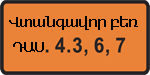
8.19
Class of dangerous goods
Indicates the number of the class (classes) of dangerous goods according to the standard. Used with signs 3.32 “No vehicles carrying dangerous goods” and 4.8.1–4.8.3 “Direction of travel for vehicles carrying dangerous goods”.
-
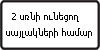
8.20.1
Vehicle bogie type
Used with sign 3.12. Indicate the number of adjacent axles of the vehicle, for each of which the mass indicated on the sign is the maximum permissible.
-
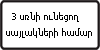
8.20.2
Vehicle bogie type
Used with sign 3.12. Indicate the number of adjacent axles of the vehicle, for each of which the mass indicated on the sign is the maximum permissible.
-
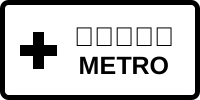
8.21.1
Type of public transport vehicle
Used with sign 6.4 to indicate parking areas for vehicles near metro stations.
-
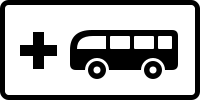
8.21.2
Type of public transport vehicle
Used with sign 6.4 to indicate parking areas for vehicles near bus (trolleybus) stops.
-
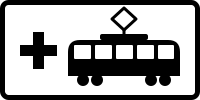
8.21.3
Type of public transport vehicle
Used with sign 6.4 to indicate parking areas for vehicles near tram stops.
-

8.22.1
Obstacle
Used with signs 4.2.1–4.2.3; they indicate the obstacle and the direction for passing it.
-

8.22.2
Obstacle
Used with signs 4.2.1–4.2.3; they indicate the obstacle and the direction for passing it.
-

8.22.3
Obstacle
Used with signs 4.2.1–4.2.3; they indicate the obstacle and the direction for passing it.
-
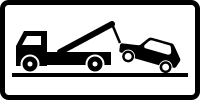
8.23
Tow-away zone
Indicates that vehicles are towed away within the area of action of signs 3.27–3.30.
-
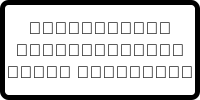
8.24
Parking for service vehicles
The plate may show the name of the organization using the parking area.
-
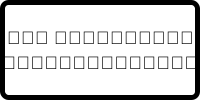
8.25
Except service vehicles
The plate may show the name of the organization.
-
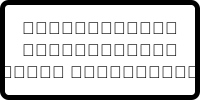
8.26
Parking for tourist buses
-
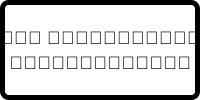
8.27
Except tourist buses
-
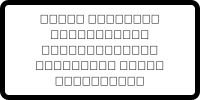
8.28
Parking for mobile trading vehicles
-
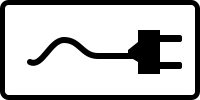
8.29
Electric vehicle charging
Used with signs 7.4, 7.5, 7.7 and 7.9–7.11 to indicate that electric vehicles can be charged there.